Discussion 1: Fake News
Before I give examples of fake news, I will tell you what fake news means to me. Reason I will be doing this is because nowadays it is being used as a blanket term for any disagreeable opinion or incorrect information posted online. Let me elaborate by giving an example on what I meant by incorrect information. Last June 2015, ABSCBN ran a story that Bimby was “bitten” by a jelly fish. We know this is impossible because a jelly fish does NOT have teeth (check reference: Bimby, nakagat ng jellyfish habang nagta-taping ng Kris TV! Kumustahin ang kalagayan ng child star at kung papaano nalunasan ang nasabing insidente). Wrong information, agreed. But I do not consider this fake news. See what I mean? I have a strong bias against unnecessary labeling and it irks me whenever I encounter people doing this – regardless if they do it online or on actual face to face conversations. I will readily engage in discourse if the topic is factual. However, and this is important, I do NOT debate about opinions. For example, a person can tell me he dislikes the current president because of a million obvious reasons (at least from that person’s perspective). It’s fine and good with me. I will agree to disagree. But fake news, which to me means something very specific – these are falsehoods masquerading as legitimate news, is a topic I will entertain with gusto. So, I will begin.
Fake News #1
Links:
Archived Inquirer article – https://archive.fo/nOLV2
DOTr official statement regarding the said article – https://www.facebook.com/DOTrPH/posts/997964373676032
A writer from Philippine Daily Inquirer, in an article titled “New rail projects in, informal settlers out”, stated that “The National Housing Authority (NHA) would have to remove 18,455 families from PNR tracks in Bulacan and Pampanga provinces. Shanties along or on railroad tracks had been called homes “along da riles” (homes along the tracks), after the popular 1990s television comedy series “Home Along Da Riles,” which starred the late comedian Dolphy.” Wow, there is even a reference to a beloved 90s sitcom! I must say that was very creative. But apparently, that wasn’t the only part the reporter was creative. She continues by saying, “Covered by the new projects were 41,000 families in the cities of Malabon, Caloocan and Valenzuela in Metro Manila; the towns of Meycauayan, Marilao, Bocaue, Balagtas and Guiguinto, and the City of Malolos in Bulacan; and the towns of Apalit, San Simon and San Luis, and the cities of San Fernando, Angeles and Mabalacat in Pampanga.” That is a lot and it is definitely no laughing matter. Said report was released last November 13, 2017 and was addressed the next day by DOTr in their official Facebook page. It gets interesting from hereon. According to a released statement of DOTr, they “reached out to the author and the author clarified that the following statements in her article are based on 2008 data“. Old data used for current news? Not good. It doesn’t end there though. DOTr continued to advise that there will be “414 informal settler families (that) will be resettled for PNR Clark Phase 1 (Tutuban-Malolos) based on the project’s post-detailed engineering Resettlement Action Plan.” and added “For PNR Clark Phase 2 (Malolos-Clark), the estimate number of affected families is 224 based on the project’s Feasibility Study. The number for Phase 2 may still change during the project’s detailed engineering design.“
Fake News #2
Links:
Archived Inquirer article – https://web.archive.org/web/20171106120246/http://newsinfo.inquirer.net/943419/philippine-news-updates-special-action-force-yu-yuk-lai-diana-yu-uy-drug-smuggling
Updated Inquirer article – http://newsinfo.inquirer.net/943419/convicted-drug-queens-daughter-has-security-detail-enjoyed-by-vips-raiders
Supporting Inquirer article – http://newsinfo.inquirer.net/943928/breaking-news-yu-yuk-lai-ronald-dela-rosa-pnp-drugs-walter-vidad-police-security-and-protection-group-pspg
PSPG site – http://pnppspg.org/index.php/about-us/mission-vision
Stark contrasts here. So the first one is the archived version. Here the reporter states that “Authorities who raided the home of the daughter of convicted “drug queen” Yu Yuk Lai have a startling discovery: She has one guard from the police’s elite Special Action Force and another from the Presidential Security Group.” No one in his right mind won’t be alarmed with this article. For one, this was during the time there is heavy debate regarding the war on drugs. I too was doubtful about the PH government’s stance. And this report totally fuels the rage of many who believes a more humane solution must be in place. The next day however, a correction was issued. But, I daresay, the error was neither small or irrelevant. The error completely changes the context! The updated report states “Uy’s security detail has been identified as Police Officer 3 Walter Vidad from the Police Security and Protection Group (PSPG) of the Philippine National Police (PNP), not the Presidential Security Group or the Special Action Force as earlier reported. PSPG’s mandate is to provide security and protection to national government officials, foreign dignitaries and certain private individuals approved by the PNP.” Note that in a supporting article released the day after the correction was made, it was stated that “…Vidad (PNP) had provided protective security to Uy since 2014 after the PNP Directorate for Intelligence confirmed there was a threat to kidnap her.” What is the bigger picture? Let us piece together. Since 2014, 1 single policeman has been serving as a personal security detail for Uy – he is Police Officer 3 Walter Vidad from the Police Security and Protection Group (PSPG) of the Philippine National Police (PNP). The people who are allowed to avail of this service are “elected and appointed national government officials; members of the diplomatic corps and visiting foreign dignitaries; delegates and/or participants during special events, private individuals authorized to be given protection and vital government installations.” The last statement was taken directly from the Mission statement of PSPG.
Now, for the tough questions: (1) How do we penalize the purveyors of fake news? and (2) How do we fight fake news?
It must be said that we actually have laws in place for this. According to our Revised Penal Code:
Art. 154. Unlawful use of means of publication and unlawful utterances. — The penalty of arresto mayor and a fine ranging from P200 to P1,000 pesos shall be imposed upon:
1. Any person who by means of printing, lithography, or any other means of publication shall publish or cause to be published as news any false news which may endanger the public order, or cause damage to the interest or credit of the State;
2. Any person who by the same means, or by words, utterances or speeches shall encourage disobedience to the law or to the constituted authorities or praise, justify, or extol any act punished by law;
3. Any person who shall maliciously publish or cause to be published any official resolution or document without proper authority, or before they have been published officially; or
4. Any person who shall print, publish, or distribute or cause to be printed, published, or distributed books, pamphlets, periodicals, or leaflets which do not bear the real printer’s name, or which are classified as anonymous.
This is NOT enough of course. But the truth is in a democracy such as ours we can’t go around muzzling people. It will be hypocrisy if we demand censorship on non-traditional mass media and yet we fight for the freedom of speech of the traditional ones. Besides, no one has the monopoly of truth so therefore it is impossible to point out an arbiter. More importantly, we can’t say that the public couldn’t be trusted in discerning right from wrong and that a different body must intervene in making sure the information is “safe for public consumption”. No, that is an insult. Filipinos are not single celled microorganisms who can’t think for themselves even if their lives depended on it. Who then decides what is fake news or not? It is us, the public, who ultimately decides simply because we are the recipient of the information. IT IS US. We have the responsibility to proactively seek out the truth and we must fight fake news not with censorship but with more information. Stand and inform. The moment we start saying that we fear speaking out because we might be “bullied” is the day we concede that fake news has won.
Revised Penal Code – https://www.scribd.com/document/235595237/TITLE-3-Article-153-160-Criminal-Law-II-Review-Notes-Revised-Penal-Code-Article-153-160
Supporting article regarding law on fake news – http://cnnphilippines.com/news/2017/09/01/False-news-jail-fine-Republic-Act-10951-Revised-Penal-Code.html
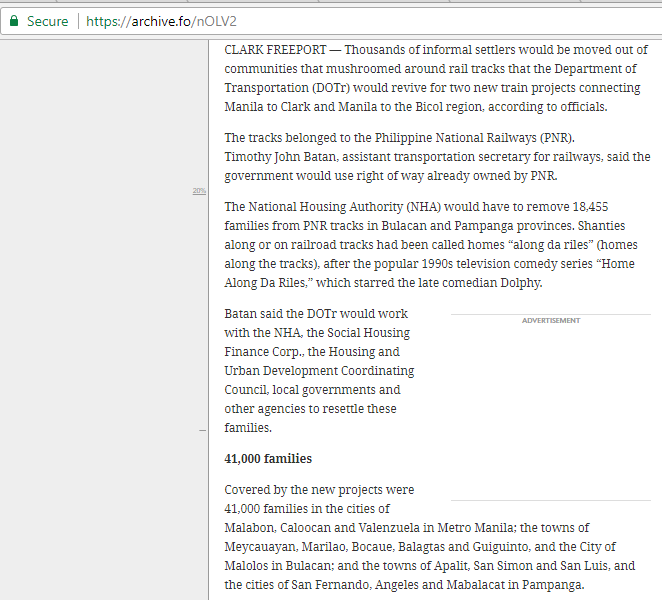
Figure 1.1 Archived article “New Rail Projects In, Informal Settlers Out”
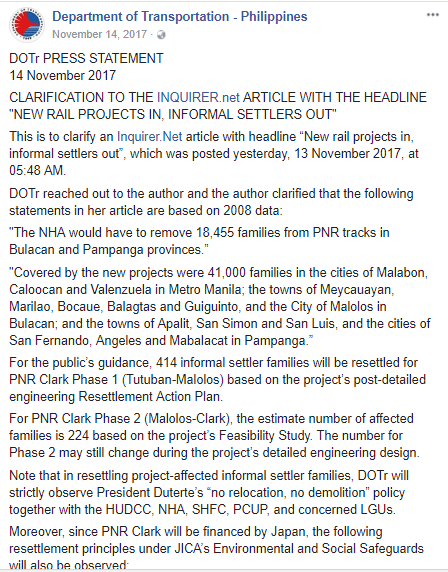
Figure 1.2 DOTr response to the artice in 1.1.
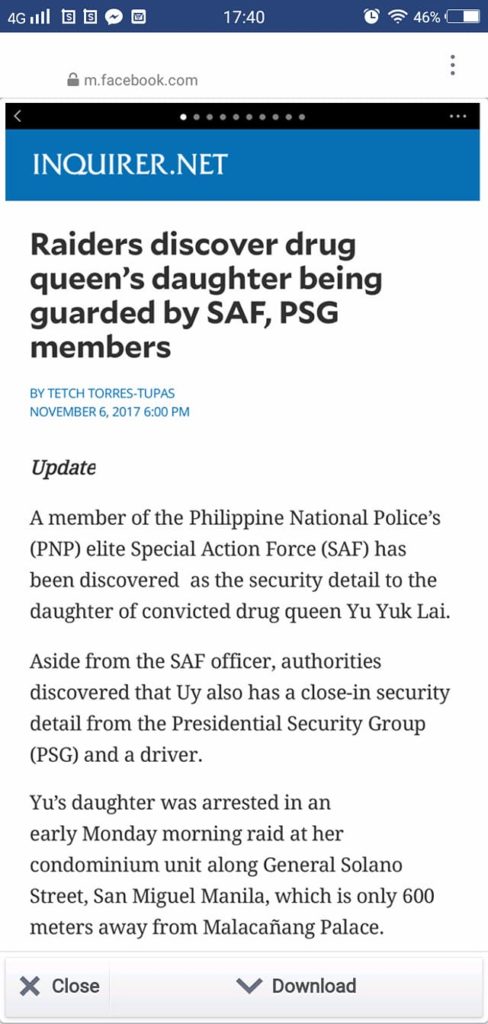
Figure 2.1 Archived article “Raiders Discover Drug Queen’s Daughter Being Guarded by SAF, PSG Members”
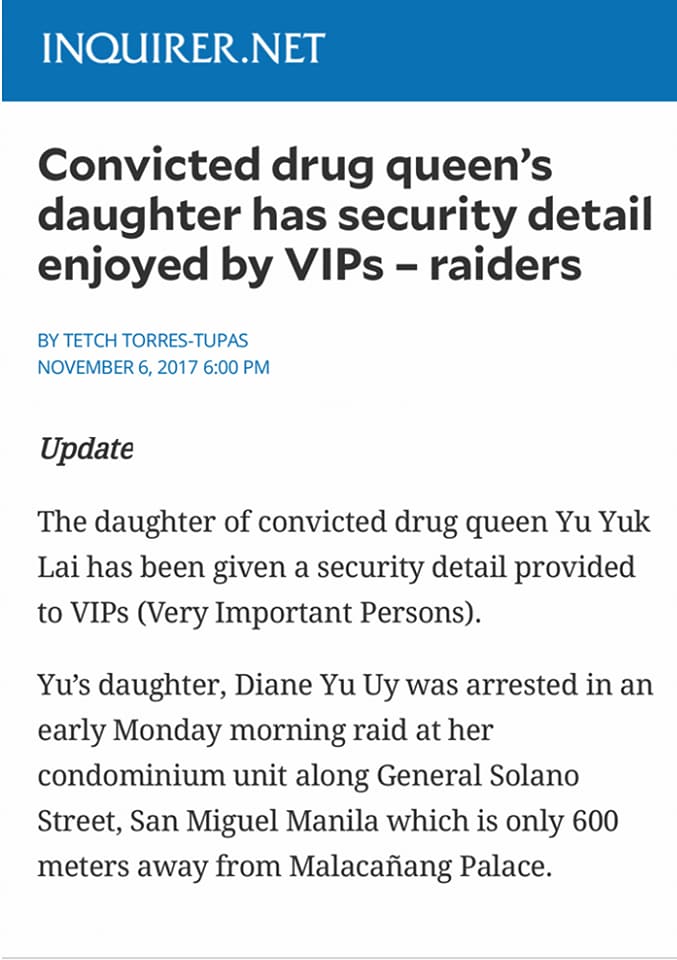
Figure 2.2 Corrected article of 2.1 with different facts and context
Discussion # 2: Political Economy of Media
Political economy is defined by Vincent Mosco as the study of the social relations, particularly the power relations, that mutually constitute the production, distribution, and consumption of resources, including communication resources.
Without a doubt, the influence of media in our society is incomparable. It is almost impossible to dissociate ourselves from the power of their grasp unless of course we choose to literally live under a rock.
In his book “The Political Economy of Media”, Professor Robert W. McChesney explains the implications of the influence of media and capitalism in politics. Here he stated journalism’s importance to a democratic state:
1.) Democracy must have a rigorous watchdog of those in power and those who want to be in power.
2.) Democracy must have a way to ferret out truth from lies.
3.) Democracy needs a way to present a wide range of informed positions on the important issues of the day.
These hold true and remain relevant even to our modern society however it is undeniable that over time there are certain biases of today’s mass media that has affected how the public chooses to accept information from them. Seasoned journalist Ben H. Bagdikian in his book “The New Media Monopoly”, provides us 3 which I will summarize:
1.) Monopoly of legitimate news by “official sources”. By official sources they mean government officials, key public figures (or what we now call thought leaders) etc. In effect, we are providing too much power on a certain group of people whose personal agenda is expected to be in the forefront of their interest. If reporters treat their words with finality and ignore what they choose to not speak about, we will be trapped in the perfect bubble of carefully filtered ideologies by a handful of powerful people.
2) Professional journalism tends to present news in a decontextualized and non-ideological manner. And expect that whatever context or ideology that will be given will conform to what was provided by the small group mentioned in #1. This leaves us uninformed because the topics that are given weight tend to create an illusion and provide us with generalizations which are far from the truth. Crucial issues like racism or global warming are put in the back burner and political controversies are not given the full range of informed positions that they deserve.
3) “Dig here, not there” phenomenon. When we hear more about showbiz gossip (i.e. Bimby’s teacher got mad at him, Ellen Adarna is pregnant) or petty world record breaking (i.e. most number of people kissing all at the same time, dancing prisoners etc) or about a government official’s scandalous affairs (particularly one that is antagonistic to the political views of the media company’s owner), this is subtle yet formidable bias. They say ignorance is bliss but not knowing about the corruption of influential giants, say mining companies or select political dynasties, narrows down our perspective because we only see what they want us to see.
I’ve always said we live in interesting times and the Philippines’ political economy is at its most intriguing. Lately it seems that there is this notion that social media is being weaponized to silence dissent. To be completely honest, I think that is far from the truth. Simply because neither Mocha nor PAB invented the usage of cyberspace for propaganda – these are all part of politics since time immemorial! I feel the discourse is more vibrant and more engaging than any other time in the past. There is not one group that controls the playing field and voices are heard from all walks of life. There is a caveat though and we need extra vigilance – fact check, call out (if necessary) and stand up. We must not get lost for this has only just begun.
References
Mosco, Vincent. Political Economy of the Media, The International Encyclopedia of Communication. 2008. http://www.blackwellreference.com/public/tocnode?id=g9781405131995_chunk_g978140513199521_ss57-1
McChesney, Robert W. The Political Economy of Media: Enduring Issues, Emerging Dilemmas. 2008. http://hope.journ.wwu.edu/tpilgrim/j190/MacNUBOOKch1.html
Bagdikian, Ben H. The New Media Monopoly. 2004. https://www.goodreads.com/book/show/151637.The_New_Media_Monopoly
Recommended Read
Introduction written by Robert W. McChesney and Ben Scott for Upton Sinclair’s book – The Brass Check: A Study of American Journalism